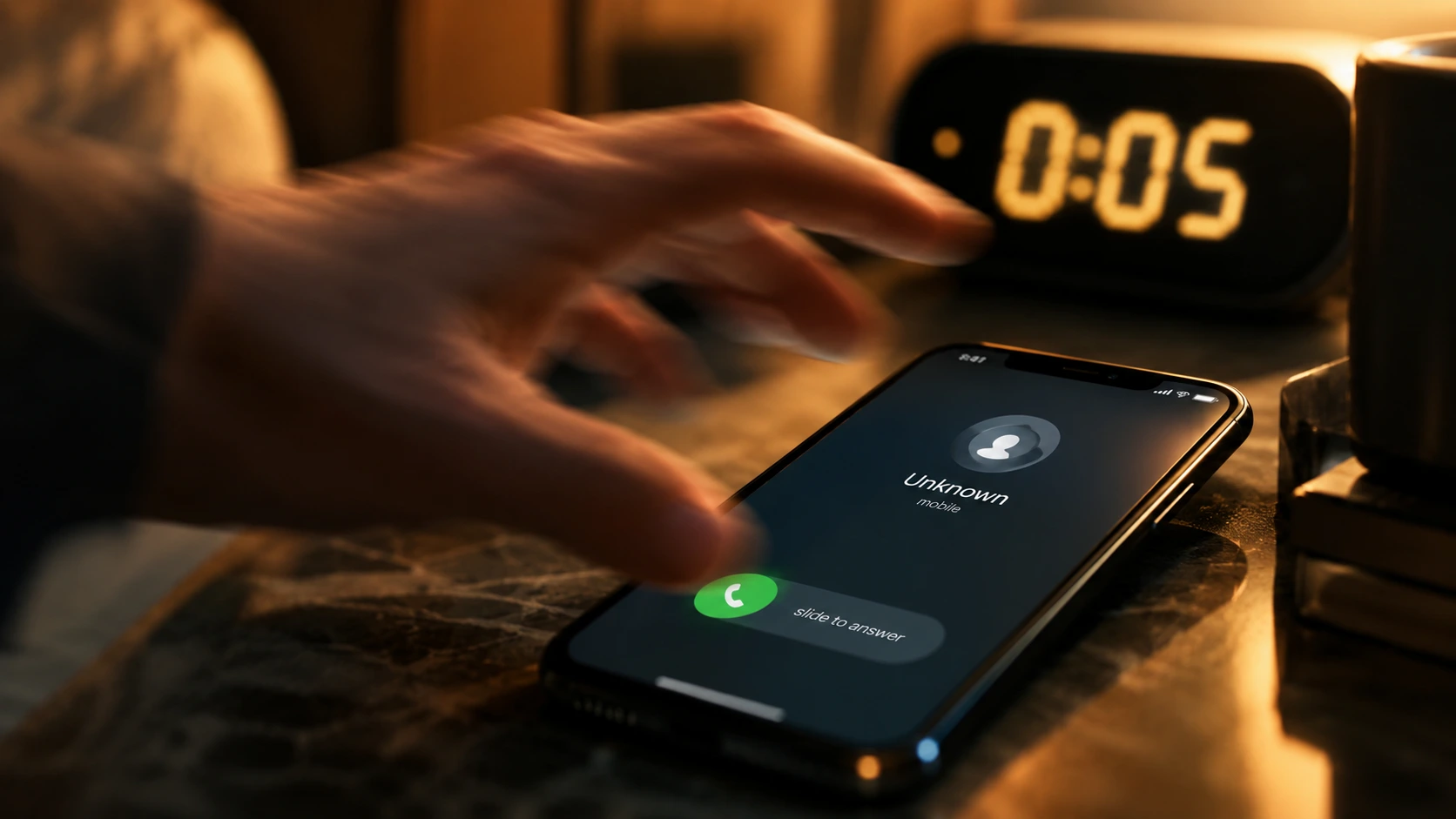
Where I come from, your word is measured by your timing. If you tell somebody you are going to call them right back and three days go by, it does not matter how good your intentions were. In our community, reliability is not a speech you give. It is a thing you prove, fast, again and again, until people stop wondering whether you will show up. I think about that every time I watch a talented agent lose a deal they never even knew they were in. They had the knowledge, the license, and the heart. What they did not have was speed, and speed is where the modern sale is quietly won or lost.
Here is the direct answer this whole piece is built around. The outcome of an online inquiry is usually decided long before you ever get to use a single closing technique. It is decided in the first five minutes, by whether you answered at all. Your lead response time is the new first impression, and in a digital world where a prospect can fill out four forms on four websites in the time it takes you to finish lunch, the agent who responds first is almost always the agent who gets the conversation. This article is about removing the friction between the moment someone raises their hand and the moment a real human connection begins.
The most important study on this subject is one most agents have never read. In 2011, researchers James Oldroyd, Kristina McElheran, and David Elkington published a piece in the Harvard Business Review called "The Short Life of Online Sales Leads," analyzing more than 2,200 companies and over 100,000 web-generated inquiries. Their core finding became the foundation of what the industry now calls the five-minute rule. Responding to a new lead within five minutes made a company roughly 100 times more likely to make contact and 21 times more likely to qualify that lead than waiting just 30 minutes. Not 21 percent. Twenty-one times.
The decay curve is merciless. After the first hour, the odds of qualifying a lead drop by an order of magnitude, because by then the prospect has either solved their problem another way or started talking to your competitor. And here is the part that should keep every principal up at night. Study after study finds that the average business takes somewhere around 47 hours to respond to a new inbound inquiry, and a large share never respond at all. Meanwhile, research consistently shows that somewhere between a third and a half of all sales go to whoever simply responds first, and that 78 percent of customers ultimately buy from the very first company that gets back to them. Speed-to-lead is not a vanity metric. It is the single biggest lever on your conversion rates that almost nobody is pulling.
The first responder does not win because they are the best agent. They win because they were present at the exact moment the prospect's intent was at its peak. Everyone else is selling to a memory.
The cruel irony is that the harder you work, the more leads you lose to slow response. You cannot sit beside your contact form for 24 hours a day. You are at a closing, on a showing, asleep, or with your family where you belong. So the inquiry that lands at 9:47 on a Tuesday night sits there glowing in your inbox until you surface the next morning, by which point that buyer has already had a real conversation with someone who answered. This is not a discipline problem you can shame yourself out of. It is a coverage problem, and coverage problems are solved by systems, not by guilt.
This is the exact spot where a lot of agents make a costly assumption. They think the only way to respond instantly is to be personally glued to a screen, so they either burn themselves out trying or accept the losses as the cost of doing business. Neither is necessary anymore. The tools to close that gap are mature, affordable, and available to the smallest independent operator. The job is no longer to be faster than humanly possible. The job is to build a system that is fast on your behalf, so that you can be fully present for the moments that actually require you.
The breakthrough that changes this equation is conversational AI. Think of it not as a robot pretending to be you, but as a tireless front-desk professional who never sleeps and never lets a prospect stand in an empty lobby. When someone submits a form or messages your page at midnight, a well-built conversational system greets them by name within seconds, answers their first questions accurately from your own information, and begins the work of lead qualification by asking the simple, natural questions you would ask yourself. Are they buying or selling. What is their timeline. Have they spoken to anyone else yet.
This delivers two things at once that a human alone never can. The first is instant response, which captures that peak-intent moment the research is so emphatic about. The second is consistency, because the system gives every prospect the same accurate intake every time, with none of the human error that creeps in when you are exhausted or distracted. Modern platforms reply in well under a second, route the conversation based on what they learn, and sync everything straight into your CRM so nothing falls through the cracks. The leads who engage in a real back-and-forth, rather than a one-line drive-by, signal genuinely high-intent, and your system can flag them for you the instant they go warm. That is the kind of sales automation that does not replace the relationship. It protects it.
None of this works if you forget what the technology is actually for. Automation opens the door. You close it. The entire point of letting a system handle the instant handshake and the routine qualification is to free you, the agent, to step in at the moment your expertise is worth the most. When the prospect is qualified, engaged, and ready for a real conversation, you arrive with full context already gathered and full presence already available, instead of fumbling through cold introductions while three other agents are still asleep.
That handoff is everything. The machine carries the logistics so that the human can carry the trust. And once you have stepped in, the long game of relationship-building begins, which is a different discipline entirely. Speed gets you the conversation. What you do over the following days and weeks is what earns the commitment. I broke down that second half of the equation, the psychology of staying in someone's corner until they are ready to move, in The Psychology of the Follow-Up. The instant-response system in this piece and the patient follow-up system in that one are two halves of the same machine. One catches the lead at the peak. The other keeps the relationship warm until it closes. The same speed-and-system logic also rescues the dormant contacts you already own, which is the entire premise behind The Database Goldmine. When an old lead finally re-engages, the clock starts over, and your response time decides whether that second chance becomes a closing.
A word of caution, because moving fast is not the same as cutting corners. The goal is speed that feels human, not speed that feels like a machine ambushing someone. If your automated response is clunky, slow to load, or obviously robotic, it does more harm than the silence it replaced. Build the experience so it feels like a warm, competent greeting, then get a real person involved as soon as the prospect signals they are ready for one.
There are also real rules worth respecting. Regulators have tightened the standards around automated outreach, and the FCC now requires prior express written consent before you use AI-generated voice in certain outbound contact. The cleanest and safest path is to focus your automation on inbound conversations, where the prospect came to you first, rather than on aggressive automated cold outreach that can land you in legal trouble. Speed should never become an excuse to ignore consent or context. If you are still wiring the pieces of your stack together and want a plain-language walkthrough of connecting these tools without a developer, the no-code automation guide over at HelpWebmasters is a practical starting point.
At the end of the day, this is not really a story about technology. It is a story about respect. When you respond to someone in seconds, you are telling them, before you have sold them anything, that they matter and that you keep your word. That message, delivered at the speed of intent and backed by a real human ready to step in, is the most reliable closing advantage available in this market. The agents who build it will not just win more deals. They will win them while still making it home for dinner.