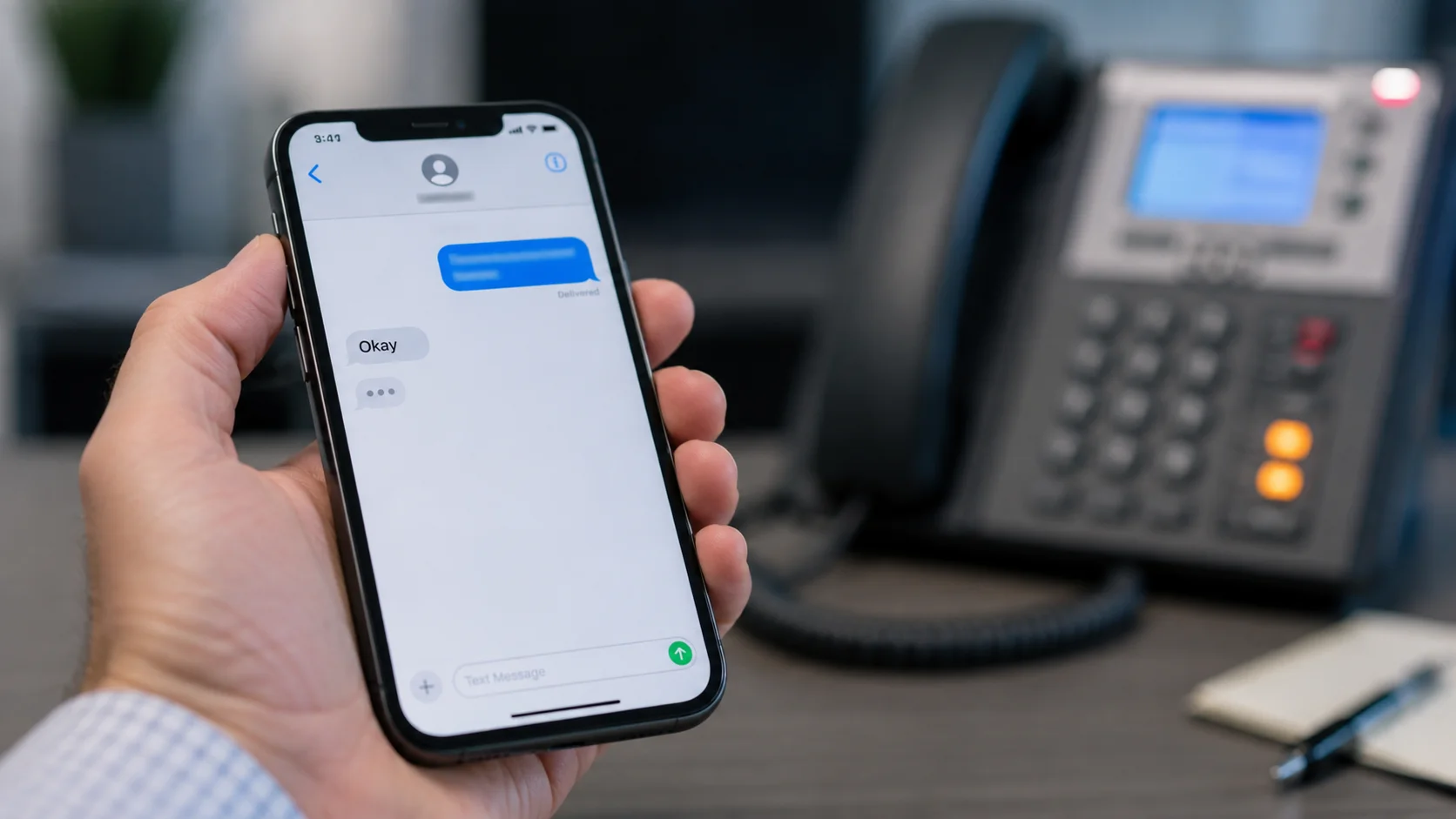
A prospect who does not want to hear from you rarely writes a letter. They type four letters into a text thread and put the phone down. For years the industry read that as a narrow instruction: stop texting, keep dialing. A federal judge in Florida just told a company that the reading was wrong.
In a ruling issued August 11 in Zagury v. Puragin Water, the Southern District of Florida allowed a Telephone Consumer Protection Act class claim to move forward on the theory that a consumer replying "stop" to a marketing text can revoke consent for phone calls too, not only for SMS. The escape valve the court left open is small and specific: a business that sends a confirmation message expressly limiting the revocation to text messages has a much better argument that calls remain permitted.
In short: If your text platform and your dialer do not share a suppression list, you are probably calling people who told you to stop. Fixing it is an afternoon of work, not a quarter of it. Sync the suppression data across every outbound channel, add a confirmation text that states plainly what the opt out covers, and document both. That is the whole remedy, and it is cheaper than the first demand letter.
Why this one matters more than the average TCPA headline
Most compliance news is about somebody else's business model. This is about a configuration setting inside yours. The typical outbound sales stack is a texting tool, a dialer, an email sequencer and a CRM bolted together over three years, and suppression logic almost never travels cleanly between them. A lead texts "stop" at 9:04 on a Tuesday. The SMS platform honors it instantly. The dialer, which never received the signal, calls that same number Thursday morning because the record still shows an open opportunity. Before August 11 that was sloppy. Now it is the fact pattern in a class action ruling.
Consent revocation has always been the least glamorous part of TCPA compliance and the most expensive to get wrong, because it scales. One misrouted opt out is a mistake. A misconfigured integration is thousands of them, each with its own statutory damages figure attached. And the plaintiff's bar does not need to prove you meant it.
Worth noting how the reporting got here: the ruling has been covered by TCPA specialist firms and syndicated through the National Law Review rather than reported from the docket by a wire service. The case name, court and date are consistent across outlets. Before you quote the opinion in a vendor negotiation, pull it yourself.
Your quote form is now a liability surface too
Two days later, in the Central District of California, a court let wiretapping claims proceed against Wayfair in Limas v. Wayfair LLC, No. CV 25-11185-DMG. The complaint targeted six third party trackers running on the company's website: TikTok, Meta, Pinterest, Snapchat, X and Reddit. Claims under California's wiretapping statute survived. A narrower pen register theory was dismissed without leave to amend.
Read that list again and then look at your own quote page. Most agencies run at least two of those pixels on lead capture forms, usually installed years ago by whoever built the site, usually never inventoried since. The court also signaled something useful about how these cases get pled: the complaint survived in part because it walked through each tracking tool with screenshots and code samples. Plaintiffs are documenting the tag stack. Almost nobody on the defense side is documenting it first.
This is not an argument for ripping out your ad tech. It is an argument for knowing what is on the page where somebody types their phone number, and for making sure your disclosures actually describe it.
"But they were already a customer" is thinner than it sounds
On the same day as the Florida ruling, the Middle District of Florida allowed a claim under the state's telephone solicitation law to proceed in Specht v. Lee Health System, No. 2:26-cv-635-KCD-KRH, despite the defendant asserting an established business relationship. The court did not throw the defense out. It held that two questions need facts, not assertions: whether a relationship existed with that particular entity, and whether affiliated entities fall within what a consumer would reasonably expect.
That second question is the one that should make multi entity operators uncomfortable. Brokerages, franchise networks and agencies with a separate marketing LLC routinely treat a relationship with one entity as license for outreach from another. A consumer who bought a policy through your agency did not necessarily agree to hear from your affiliate about mortgage refinancing. The relationship belongs to the entity that earned it.
The FTC is looking at the ad, not just the call
On August 17 the Federal Trade Commission announced a $2.1 million settlement with the bill payment company doxo, along with its co-founders Steve Shivers and Roger Parks, in the Western District of Washington. The allegations: paid search ads that implied an official affiliation with the billers consumers were trying to pay, undisclosed delivery fees, and enrollment in recurring subscriptions without adequate consent. Christopher Mufarrige, who runs the agency's Bureau of Consumer Protection, described the harm in one line.
"Misleading search text ads thwart consumers' pursuit of information"
The doxo conduct sits further out than anything a legitimate agency does. The principle underneath it does not. If your search copy implies you are the carrier, the lender or the official channel when you are the intermediary, that is the same theory with a smaller number attached. Read the Commission's announcement and note how much of it is about the ad text rather than the transaction.
What is coming down the pipe at your vendors
The Federal Communications Commission has an open proceeding on stronger know your customer requirements for originating voice providers, docketed as CG Docket Nos. 17-59 and 02-278. In late July, attorneys general from all 50 states and the territories filed in support of a tougher rule and against any carve out for small providers. The proposals on the table include collecting a customer's name, physical address, government issued identification number and an alternate telephone number, four year retention after a customer relationship ends, and a base forfeiture of $2,500 per offending call. The coalition cited more than 29.6 billion scam calls and texts in a single year and nearly $2 billion in consumer losses.
None of that regulates your agency directly. All of it lands on the dialer vendor sitting between you and the network. Expect more onboarding friction, more documentation requests, and more accounts terminated on short notice for traffic patterns that look wrong. The agencies that keep clean consent records will find this annoying. The ones that cannot produce them will find out what a sudden shutoff does to a pipeline, which is a version of the problem we covered when a judge asked Rocket Mortgage to prove a lead was real.
The afternoon audit
Five things, in order of how much trouble they save.
Sync the suppression list
Start with suppression. Take one number that has opted out of texts and confirm it is suppressed in the dialer, the email tool and the CRM. If it is not, that is your Tuesday. SMS marketing consent and call consent live in the same record or they do not live anywhere useful.
Write the confirmation message
Second, write the confirmation message. One sentence, sent automatically on opt out, stating exactly what the request covered and how to opt out of everything else. It is the difference between a defense and an apology.
Inventory what is on the form page
Third, inventory the tags. Open your quote page, list every third party script on it, and match that list against your privacy disclosure. If the disclosure was written before the pixel was installed, the disclosure is wrong. Website tracking pixels are a marketing decision with a legal footprint.
Map your entities
Fourth, map your entities. If leads flow between affiliated companies, write down which entity captured the consent and which ones are relying on it. Then decide whether a consumer would have expected that.
Ask your vendors what they will demand
Fifth, ask your carrier and dialer what documentation they will demand if the know your customer rules tighten, and get it assembled now rather than during a suspension. Every one of these steps is the same discipline that makes fast response systems work in the first place: knowing precisely what your stack did, and when.
Volume was never the constraint that separated good agencies from lucky ones. Records were. Lead generation compliance is not a legal department problem you will grow into later, it is the operational hygiene that decides whether your outbound program survives its first plaintiff. The court in Florida did not invent a new rule this month. It just made the cost of a missing integration visible.